Science
Harvard has a library of colors with stories older than the paint.
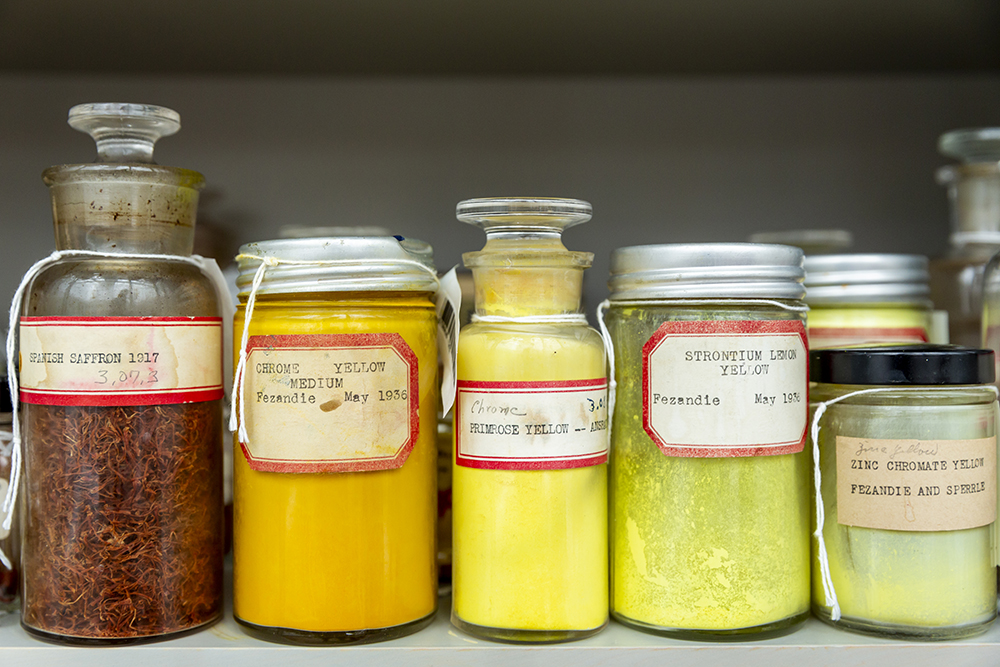
Its pigment collection helps researchers identify what artists used to make color.
Inside Harvard Art Museums is the Forbes Pigment Collection, a wall of carefully labeled pigment samples assembled by Edward Forbes in the early 20th century. The jars are more than a bright display: conservators use them as references to identify pigments found in artworks and understand how a painting was made. Some samples come from minerals or plants, while others are products of modern chemistry. Researchers can compare a color in a painting with materials artists could have used at the time. A tiny jar of red or blue can help tell the story of a much larger artwork — and preserve knowledge that might otherwise fade with the paint.